English (United States)
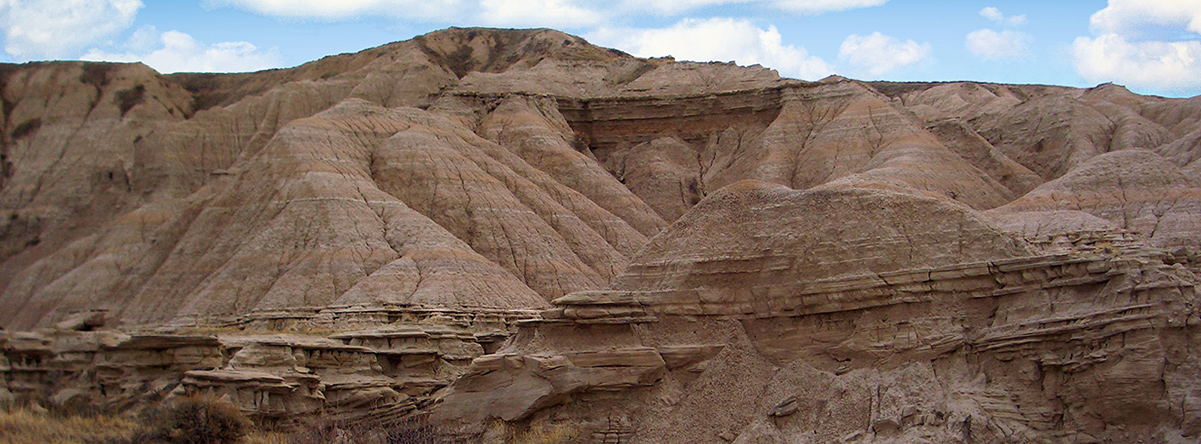
Image: Toadstool Geologic Park in Crawford, Nebr.
Without reliable roads, highways and interstates, we couldn’t explore this beautiful state with ease, traveling from Toadstool Geologic Park in Crawford to the Archway in Kearney to the College World Series in Omaha.
These roadways connect our towns, move our goods (including those packages arriving today), and keep our economy running.
Our electric grid works the same way. Just as a transportation network keeps people and products moving, our transmission and distribution (T&D) system keeps energy flowing from where it’s generated to where it’s needed. And as Nebraska grows, the energy “traffic” on those highways is increasing faster than ever.
Think of it this way: power plants are the factories that produce electricity. Transmission lines are interstate highways, carrying large amounts of energy across long distances. Substations act as distribution centers, preparing that energy for safe delivery. And distribution lines are the neighborhood streets bringing electricity directly to homes, farms and businesses, almost at the speed of light.
We can – and are – building new “factories,” including Princeton Road Station, as well as adding new generation at existing locations like Beatrice Power Station and relicensing Cooper Nuclear Station for many more years of carbon-free energy production. But without energy highways, that additional power can’t reach customers. Strengthening our T&D system is one of the most important steps we can take for Nebraska’s future.
Across the country, demand for new transmission is soaring. Since 2023, U.S. utilities have added more than 3,600 miles of new transmission, and another 41,000 miles are in planning or development. Nearly 470,000 megawatts (MW) of new generation have been proposed nationwide, yet fewer than 20% of those projects are completed, often because the grid simply lacks the capacity to connect them.
The North American Electric Reliability Corporation (NERC) projects peak demand will grow by more than 170 gigawatts by 2032, driven by new electric technologies and major industrial expansion.
Nebraska is feeling this growth, too. Just two years ago, new businesses typically needed one to 10 MW of energy. Today, many require 50, 100 or more megawatts to operate. We are preparing for the largest generation buildout since the 1970s, and our T&D system is the backbone that makes getting that energy to customers possible.
As a public power utility, we focus on setting responsible rates that cover the cost of providing safe, reliable and affordable service, while reinvesting the money we earn back into our system to strengthen the infrastructure customers depend on.
One of our most important projects this year is the R-Project, a 345-kV transmission line running from Gerald Gentleman Station to Thedford and then east to Holt County. It will improve grid reliability, reduce congestion on heavily used lines and support any type of new generation, including renewables. After more than five years of delay, the project is moving forward again thanks to the reinstated Incidental Take Permit for the American burying beetle.
Major construction on the R-Project will begin this spring, with completion expected in 2028. This line, along with several other transmission projects in various stages of development, are critical “interstates” in our energy transportation network.
Our energy system must also withstand aging infrastructure, more extreme weather and evolving cyber threats. We’re addressing these challenges through innovation and proactive planning, using drones and sensors to spot issues early, applying predictive and preventive maintenance to avoid failures, and relying on automated systems that can quickly isolate problems. Strong NERC critical infrastructure protection measures and grid hardening projects further reinforce our cybersecurity posture and physical resilience.
These upgrades further improve reliability and help keep costs down for every customer.
Every mile of new line, every upgraded substation and every modernized system strengthens Nebraska’s ability to grow. With more than $300 million invested in the state’s transmission system over the past 10 years and $1.5 billion planned in the next five, we are preparing the grid for tomorrow’s demands while keeping rates among the lowest in the nation. And, it shows, as Nebraska was ranked a top state for grid reliability, fewest outages and shortest outage duration last year.
Just as strong roads ensure safe, smooth travel, a strong T&D system ensures the dependable power you rely on every day. As we build new generation, we’re also building the energy highways that will carry that power to every corner of our state — keeping Nebraska moving steadily forward.
Learn more about upcoming transmission projects.
Sources:


